
Introduction
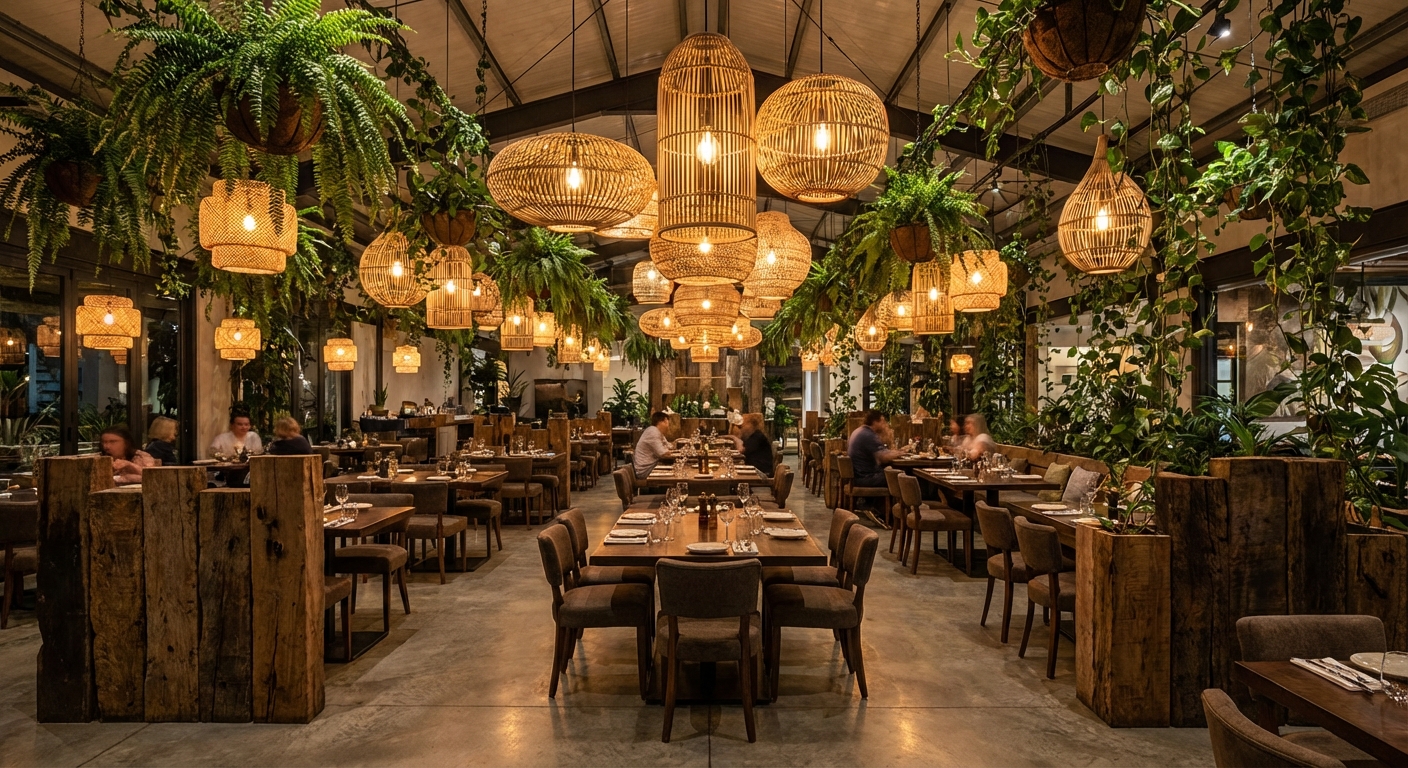
Sustainable materials are no longer a niche consideration for hospitality and commercial projects — they are a procurement and design imperative. Architects and hotel designers today must reconcile aesthetic ambitions with durability, regulatory compliance, and corporate sustainability targets. Bamboo, rattan and recycled materials offer compelling visual and tactile options, but they also present distinct technical and supply-chain challenges that influence specification, lead time and total cost of ownership. This article examines why these materials are the future of commercial lighting design and provides practical guidance on specifying them to meet performance, certification, and operational needs in hotels and other commercial interiors.
Key Industry Insight
The convergence of three market drivers—guest experience (biophilic and artisan textures), corporate ESG mandates (net-zero and circularity targets), and procurement scrutiny (certifications and life-cycle accountability)—is accelerating the adoption of sustainable materials in lighting fixtures. For hotel projects, this isn’t simply a design trend: operations directors and asset managers now evaluate fixtures on energy efficiency, embodied carbon, durability and maintenance cost over a 10–20 year lifecycle.
Why this matters for lighting specifications:
- Aesthetic differentiation: Bamboo and rattan provide warm, tactile cues that align with biophilic design and regional authenticity in hospitality programs.
- Performance expectations: Lighting must deliver photometric performance, thermal management for LEDs, and fire and hygiene compliance consistent with hospitality safety standards.
- Procurement rigor: Owners demand verifiable sustainability claims (FSC, EPD, ISO 14001), traceability and third-party testing to protect brand and liability.
- Lead-time and logistics: Natural and recycled material sourcing introduces seasonality, variable lead times and potential MOQ constraints; designers must integrate realistic delivery windows into construction schedules.
These realities shift the role of the lighting manufacturer from “supplier” to “technical partner” — one that can demonstrate material provenance, testing, and manufacturing controls while preserving design intent.
Technical Detail
Material performance and integration: a technical checklist for architects and hotel designers.
-
Material provenance and certification
- Bamboo and rattan: Specify source region and certification. FSC certification or equivalent chain-of-custody documentation demonstrates responsible harvesting. For bamboo, ask for species identification, treatment methods, and kiln-drying records to confirm dimensional stability and pest control.
- Recycled materials: Request Recycled Content Statements and, where available, Environmental Product Declarations (EPDs). For metal components, specify post-consumer recycled (PCR) or pre-consumer recycled (PIR) percentages; for plastics, request PCR PET or recycled thermoplastic data.
- Supplier audits: Include ISO 14001 or factory audit results in pre-qualification to ensure consistent environmental management.
-
Fire, hygiene and durability
- Fire performance: Natural fibers require flame-retardant treatments that meet local building code and NFPA requirements for hotels. Confirm tested assemblies and request certificates for treated components.
- UV and moisture resistance: In humid climates or pool-adjacent public spaces, finishes and adhesives must resist delamination and fungal growth. Inquire about accelerated UV and humidity cycle testing.
- Abrasion and cleaning: Hospitality fixtures face higher cleaning frequencies. Spec surface coatings that tolerate cleaning agents and abrasion without loss of appearance.
-
Photometric, thermal and electrical integration
- LED thermal management: Natural shades can alter convection paths. Verify driver placement, heat sinking and thermal tests to ensure LED lifetime is not compromised.
- Glare control and light distribution: Bamboo or rattan diffusers create distinct light textures. Request photometric files (IES/LDT) for the finished assembly, not just the raw LED module, to validate lux levels, uniformity and glare.
- EMC and driver certifications: Drivers should be CE, UL or relevant local compliance marked; for low-voltage systems, verify SELV compliance where required.
-
Lifecycle and maintenance planning
- TCO analysis: Provide lifecycle cost comparisons that include replacement cycles, cleaning and expected aesthetic drift. Sustainable materials can reduce embodied carbon but may require defined maintenance protocols.
- Replaceable components: Modular design that allows shades or trim to be replaced in the field minimizes waste and reduces downtime.
“Sustainable materials must be specified like any other performance-critical component: verified, tested, and integrated for longevity, not just for their aesthetic appeal.”
Practical Specification Guidance for Projects
For architects and hotel designers preparing lighting schedules and tender documents, adopt these pragmatic steps to mitigate risk:
-
Early engagement and mock-ups
- Order full-scale mock-ups early in the design process to validate color, texture, fixture performance and cleanability under real-world lighting and housekeeping conditions.
- Use mock-ups as contractual acceptance samples to avoid variance at scale.
-
Include explicit procurement language
- Demand certificates: “Supplier shall provide FSC certificate (or chain-of-custody documentation) for all bamboo components; EPD for fixture assemblies where available; declaration of recycled content for plastics and metals.”
- Acceptable test reports: “Provide third-party fire-retardant test reports, UV/humidity cycle test data, and thermal performance tests for LED modules integrated with the finished shade.”
-
Specify lead times and contingency
- Account for seasonality and treatment lead-times for natural materials. Include staged deliveries in the contract and identify approved alternates (engineered bamboo composites, recycled PET weaves) with pre-agreed finish and photometrics to avoid schedule slippage.
- Negotiate MOQ and pre-production runs to balance cost and timeline for small boutique projects.
-
Require maintainability and replaceability
- Define in the specification that finishes and shades are field-replaceable without full fixture removal and that spare-parts kits will be provided for initial 5–10 years of operation.
Design Trends and Material Innovation
Material innovation is expanding choices for designers who want sustainable credentials without compromising on performance or longevity:
- Engineered bamboo and hybrid composites provide greater dimensional stability and flame-resistant options while retaining the visual warmth of natural fibers.
- Recycled aluminum and steel enable structurally robust frames with high recycled content and excellent recyclability at end of life.
- Recycled PET and ocean-plastic weaves now offer UV-stable, stain-resistant textile alternatives for diffusers and acoustic applications.
- Surface finishes that replicate handcrafted textures but use durable, low-VOC coatings reduce maintenance and extend aesthetic life.
These innovations simplify compliance with sustainability frameworks like LEED, BREEAM and WELL by reducing embodied carbon and improving indoor environmental quality.
Commercial Considerations: Cost, Lead Time and Certification
Owners and procurement teams usually ask three questions: will this last, when will it arrive, and is the claim verifiable?
- Cost vs value: Upfront premium for certified materials often pays back through lower embodied carbon allocations in ESG reporting and reduced replacement cycles. Present owners with scenario-based TCO and embodied carbon comparisons.
- Lead times: Clearly document realistic manufacturing and shipping lead times in procurement packages. For bamboo and rattan, include buffer time for treatment and drying cycles; for recycled components, account for feedstock variability.
- Certification risk management: Require digital documentation (EPDs, FSC, third-party test reports) during the tender stage and hold suppliers to delivery of these documents with the first shipment.
Conclusion
Sustainable materials such as bamboo, rattan and recycled components are reshaping commercial lighting design by delivering desirable aesthetics that align with biophilic and ESG objectives. However, the successful adoption of these materials in hospitality projects requires disciplined specification: verifiable certifications, third-party testing, realistic lead times and modular, maintainable designs that protect photometric and thermal performance over a long service life.
Artilumen partners with architects and hotel designers to translate sustainable material choices into compliant, high-performance lighting solutions. If you are specifying natural or recycled materials on an upcoming project, contact the Artilumen technical team to review proven material sources, sample mock-up protocols, and certification documentation to de-risk procurement and preserve design intent.