
Introduction
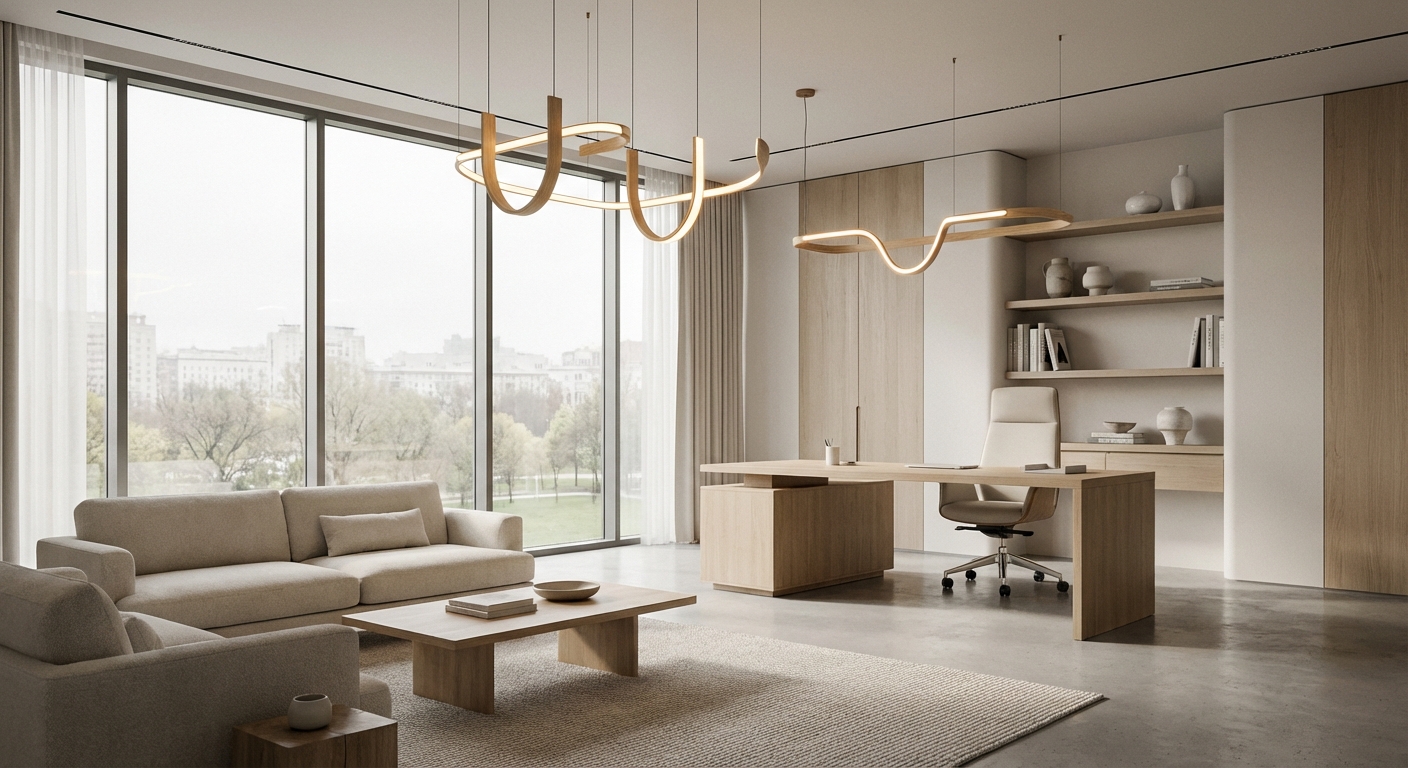
Scandinavian minimalism—or Scandi style—has become a leading aesthetic choice for contemporary commercial office environments and hospitality public spaces. Its emphasis on clean lines, natural materials, abundant daylight and restrained detailing aligns with modern workplace goals: clarity, wellbeing and operational efficiency. For architects and hotel designers specifying lighting, the aesthetic simplicity of Scandi design increases demand for technical precision: luminaires must perform impeccably, integrate with controls, meet certifications and arrive reliably on site.
This article examines how to translate Scandinavian minimalism into robust, spec-ready lighting solutions for commercial projects. We prioritize the B2B pain points you face daily: product quality and consistency, lead times and procurement risk, evolving design trends, and certification and testing requirements. The guidance includes practical specification metrics, control strategies and procurement best practices that help reduce risk while delivering an authentic Scandi outcome.
Key Industry Insight
Scandi minimalism reduces decorative complexity, which places higher expectations on lighting as both a functional and aesthetic element. In practice that means:
- Fixtures are visually minimal but must deliver high photometric performance without visible artefacts.
- Material and finish selections (anodized aluminum, etched glass, warm-toned wood accents) require close matching across batches.
- Integration with daylight and lighting controls (tunable white, occupancy detection, scene control) is integral to the experience.
- Certifications and robust test data are non-negotiable for client approvals, energy modelling and insurance compliance.
From a procurement perspective, minimalism accentuates supplier risks: any mismatch in color temperature, CRI, or finish becomes obvious in a pared-back space. Architects and lighting designers need to specify tolerances and documentation upfront and demand factory pre-production samples and photometric reports.
Technical Detail
Performance metrics matter more in Scandi interiors than in heavily decorative schemes. Key technical specifications to include in project documentation:
- Color rendering: Specify CRI ≥ 90 for general office areas and CRI ≥ 95 for hospitality public areas where material fidelity is critical (reception desks, artwork).
- Correlated Color Temperature (CCT): Common Scandi palettes use 2700K–3500K. For layered, daylight-integrated schemes, specify tunable white (2700K–5000K) with ±100K tolerance on delivered CCT.
- Glare control: Use UGR < 19 for open-plan offices and UGR < 16 for task-focused zones. Consider indirect or semi-indirect solutions to preserve the clean aesthetic.
- Luminous efficacy and lumen packages: Target 80–110 lm/W for troffers and pendants; specify lumens per square metre (lux) targets—300–500 lux for task zones, 150–300 lux for open plan and lounge areas.
- Beam control: Narrow and asymmetric optics are essential for accent and circulation without creating visual clutter.
- Dimming and controls: Require DALI-2 or equivalent digital control with L2/point-level interface for scene setting and energy monitoring. Specify compatibility with BACnet when integrating into building BMS.
- Photometric documentation: Require IES/IESNA files and LM-79 reports for all fixtures. For long-term performance modelling, request LM-80 data and TM-21 extrapolation for lumen maintenance.
- IP and IK ratings: For reception and external façades specify IP54 and IK07 as appropriate.
- Emergency compliance: Provide options that meet local emergency lighting codes (maintained vs non-maintained), with compatibility for central battery or self-contained emergency drivers.
- Acoustic considerations: Minimalist ceilings can be reflective. Where acoustic panels are used, require coordination between luminaire mounting and absorber geometry—specify shallow-profile linear fixtures with anti-vibration mounts.
Photometric consistency across lots is critical. Specify binning requirements (3-step MacAdam) and color consistency tolerances (Δu’v’ ≤ 0.005 where visual continuity is essential).
Translating Scandi Aesthetics into Fixtures and Layouts
Minimalism favors concealed or slender fixtures that deliver layered light without ornamentation. Typical fixture strategies include:
- Linear accent and general lighting: Continuous linear profiles with micro-prismatic optics or indirect uplight provide soft, even illumination and minimal visual clutter.
- Recessed downlights: Use shallow recessed modules with narrow bezel trim or flangeless trims to maintain a seamless ceiling plane.
- Suspended pendants: Select slender, low-profile suspended luminaires with integrated optics and dimmable drivers. Consider wood or soft-finish metal trims to complement Scandi materials.
- Wall grazing and uplighting: Create texture and visual depth on feature walls using asymmetric optics and precise spacing.
- Integrated daylighting: Pair automated shades or electrochromic glazing with daylight harvesting controls to maintain consistent vertical illuminance and reduce electric lighting energy use.
In open-plan offices, prioritize a combination of indirect ambient lighting and task-focused accent lighting to support flexibility. For hotel receptions and lobbies, favor warmer CCTs and layered accent light to preserve hospitality warmth inside a minimalist shell.
Procurement and Lead Time Management
Lead time and delivery consistency are two of the most common commercial pain points. Minimalist projects tolerate little margin for mismatch; missed deliveries or late changes can cascade into costly site rectifications.
Best practices:
- Lock design intent in the tender: Include finished sample approval stages and specify acceptance criteria for photometric performance, finish color and CRI.
- Split procurement into long-lead and short-lead packages: Order custom finishes and long-run extrusions early. Reserve stock or modular components (drivers, optics) for later phases.
- Require supplier lead-time guarantees and liquidated damages for critical-path items where appropriate.
- Make staged deliveries and pre-installation mock-ups contractual: On-site mock-ups reveal finish interactions, control integration and glare issues early.
- Insist on full traceability: Batch numbers, production photos, and test reports should accompany shipments to support warranty and commissioning.
- Engage manufacturers early for BIM objects, shop drawings and installation guides—reducing RFIs and site delays.
Artilumen supports phased delivery and provides sample approvals, BIM files and scheduling coordination. Work with the supplier to build contingency options—alternate fixtures with matching photometrics that can be delivered faster if needed.
Certification, Warranty and Compliance
Scandi-influenced commercial spaces still must meet rigorous safety and sustainability standards. Include these requirements in specifications:
- Safety and EMC: CE, ENEC, FCC or equivalent regional marks as required.
- Energy efficiency: EU ERP compliance or local energy code compliance; request power factor ≥ 0.9 and THD ≤ 10%.
- Photometric validation: LM-79, LM-80 and TM-21 reports; specify independent laboratory testing for critical fixtures.
- Environmental certifications: LEED, BREEAM or WELL-related documentation showing energy savings and circadian-friendly design capabilities.
- Material and fire performance: Low-VOC finishes and flame retardance per local codes.
- Warranty: Minimum five-year product warranty with options for extended coverage on LEDs and drivers; include details on in-field replacement processes and spares provisioning.
Document everything in an accessible package so MEP teams and contractors can confirm compliance prior to installation. Artilumen offers consolidated certification packs and extended warranty options tailored to large commercial programmes.
“Scandinavian minimalism reduces visual noise while raising performance demands on fixtures — precision engineering and verified photometrics are non-negotiable.”
Case Application: Office Pod and Reception Suite (Practical Example)
Scenario: A 1,200 sqm office fit-out with a double-height reception and open-plan workstations.
Design approach:
- Reception: Warm 3000K pendants over the desk (CRI ≥ 95), indirect uplighting to emphasize the double-height volume, accent grazing on reception wall.
- Open-plan: Tunable white linear modules providing a base ambient layer (3500K with daylight-adaptive control) and task uplight for desks producing 300–500 lux at desk level.
- Meeting pods: Recessed downlights with controlled beam angles and separate scene control for AV events.
- Circulation: Continuous narrow linear fittings with asymmetric optics to create a calm pathway without cluttering ceilings.
Specification highlights:
- All fixtures supplied with LM-79/LM-80 data, 3-step MacAdam binning, DALI-2 interface, CRI 90+.
- Samples of each finish and an on-site mock-up delivered 8 weeks before bulk production.
- Phased delivery schedule tied to site milestones, with a two-week buffer for critical reception fixtures.
This structured approach balances the Scandi aesthetic with practical procurement and performance controls.
Conclusion
Scandinavian minimalism in commercial office and hospitality interiors elevates lighting from a background utility to a defining material. For architects and hotel designers, the success of Scandi schemes depends on specifying high-performance, certificated fixtures, controlling color and photometric tolerances, and managing procurement and lead times with disciplined processes.
Artilumen partners with design teams to supply low-profile, high-performance luminaires with comprehensive test documentation, BIM assets and staged delivery options to mitigate risk on large projects. Contact the Artilumen team for project consultations, sample approvals and detailed specification packs tailored to your next Scandi-inspired fit-out.