
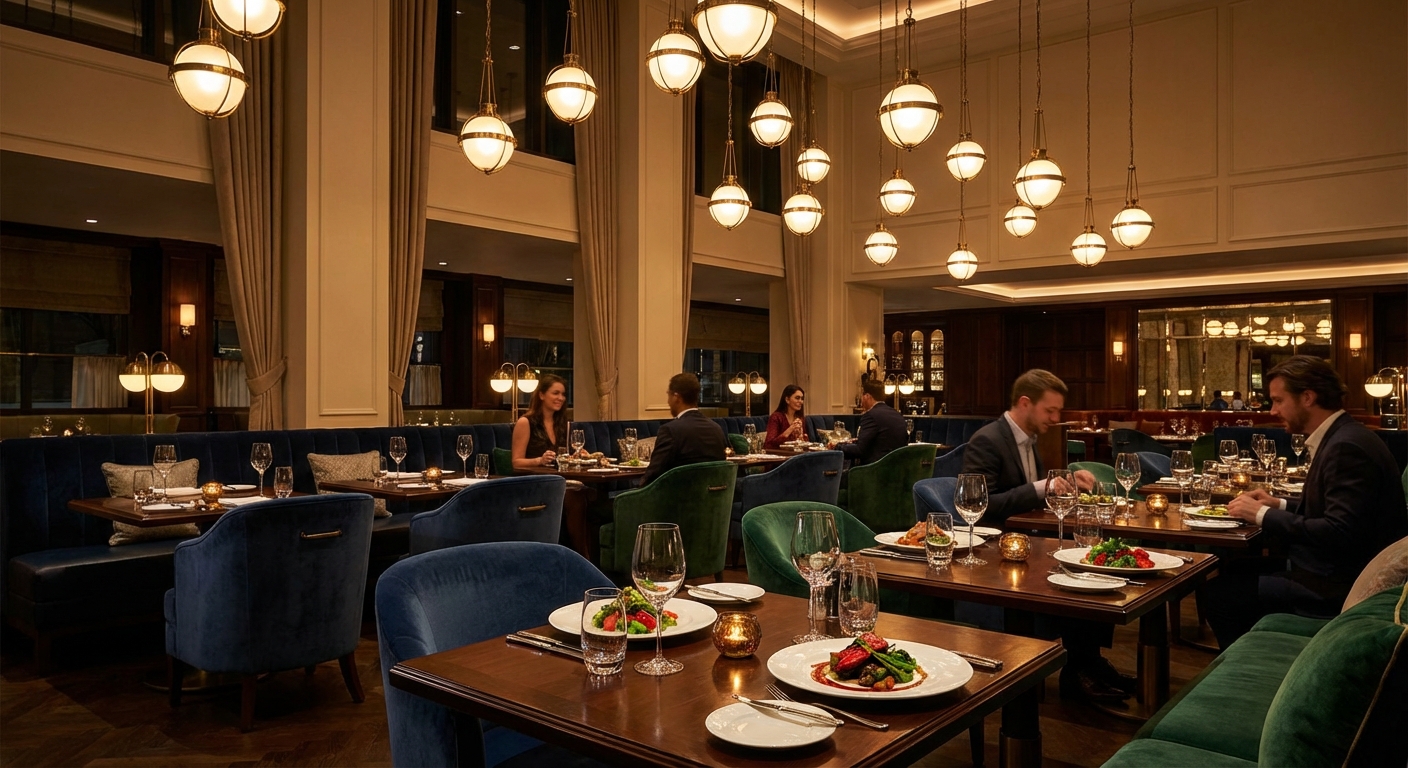
Introduction
In premium retail and luxury hospitality environments, light is not just functional—it is a revenue-driving design element. Architects and hotel designers must specify fixtures that present finishes, textiles, merchandise, and human skin tones with absolute fidelity. Color errors erode guest perception, reduce time-on-display, and undermine merchandising strategies. That is why specifying luminaires with a Color Rendering Index (CRI) greater than 90 is increasingly non-negotiable for projects where visual quality ties directly to brand value and commercial performance.
This article lays out the technical rationale, industry pain points, and practical specification guidance for design teams considering CRI>90 solutions. It addresses tradeoffs around efficacy, lead time, certification, and long‑term color stability—framed explicitly for procurement, design teams, and lighting consultants who must balance aesthetic goals with project schedules and budgets.
Key Industry Insight
High-end retail and hospitality projects consistently report measurable uplift from better color rendering. Fixtures with CRI>90 maintain accurate color perception under a variety of viewing conditions, reduce returns for merchandise-driven retailers, and enhance guest satisfaction in hotels, restaurants, and spas. However, specifying CRI>90 alone is an incomplete strategy. Decision-makers must understand spectral quality, R9 (strong red) performance, lumen maintenance, control integration, and vendor reliability to achieve the intended outcome on installation day and after five years of operation.
Common pain points for B2B buyers:
- Conflicting priorities: demanding both high CRI and energy efficiency without understanding spectral tradeoffs.
- Inconsistent delivery: long lead times or poor batch consistency cause color shifts across spaces.
- Insufficient certification: lack of LM-80, TM-21, or independent photometric data undermines risk assessment.
- Integration challenges: controls, dimming curves, and color-tunable systems that alter chromaticity and reduce perceived color quality.
Addressing these issues up front in specifications saves time, money, and reputation.
Technical Detail
Understanding CRI, TM‑30, and R9
- CRI (Ra) is an averaged metric that indicates how well a light source reproduces eight reference colors; CRI>90 indicates high overall fidelity, but it can mask weaknesses in saturated reds (R9) and blues.
- R9 is the measurement for strong red rendering—critical for skin tones, red fabrics, floral finishes, food presentation, and luxury leathers. For high-end applications, specify R9 ≥ 50 (ideally 70+) alongside CRI>90.
- TM‑30 provides a more complete profile: it includes fidelity index (Rf) and gamut index (Rg) and shows which hues shift. For premium projects, require TM‑30 Rf>90 and detailed hue vector charts to confirm no undesirable saturation or hue rotation.
Spectral Power Distribution (SPD) and perception
- SPD shows how a fixture distributes energy across wavelengths. Two sources with the same CRI can produce different SPDs, resulting in perceptible differences in materials and faces. Request SPD graphs from manufacturers and review them with material samples and mockups.
Efficacy and energy tradeoffs
- High CRI LEDs historically had lower efficacy. Advances in phosphor and LED package technology now allow CRI>90 at competitive lumens per watt, but specifiers should confirm photometric reports for the selected CCT and lumen package. Consider targeted lighting strategies (layered lighting, higher lux on products) to optimize energy without compromising color fidelity.
Certifications and long‑term stability
- Insist on LM‑80 data for LED packages and TM‑21 projections for L70 life. Verify third‑party photometric IES files, DLC Premium or ENERGY STAR listings where applicable, and warranties covering color shift (e.g., specified MacAdam ellipse limits or Δu’v’ thresholds over life).
- Specify color binning tolerances (2-step MacAdam ellipses for projects where adjacent fixtures are visually compared) and examine vendor batch consistency protocols.
Manufacturing consistency and lead times
- Color consistency between production batches is a major risk. Request manufacturer commitments to binning tolerances, and sample evaluation prior to bulk order. Lead time planning should include production of samples, mockups, and potential rework. Vendors who provide pre-shipment spectrometer reports and on-site verification reduce risk and rework delays.
Installation and commissioning
- Dimming and controls can change correlated color temperature (CCT) and color rendition. Require compatibility testing with chosen control systems and specify dimming curves that maintain color quality. For tunable white systems, define scenes and limits to avoid unwanted color rendering changes.
“In luxury retail and hospitality, lighting is an essential component of brand storytelling—specifying CRI>90 with robust spectral data and vendor assurances transforms aesthetic intent into consistent, measurable guest and shopper experiences.”
Specifier Checklist: What to Require in Project Documents
- Minimum color metrics:
- CRI (Ra) > 90
- R9 ≥ 50 (70+ preferred for textiles, skin tones, food)
- TM‑30 Rf > 90 with vector graphics provided
- Photometric and spectral data:
- Complete SPD graphs for each CCT/lumen package
- IES/LM‑63 photometric files and lux level simulations
- Longevity and consistency:
- LM‑80 test reports for LEDs and TM‑21 L70 projections
- Manufacturer color binning specification (≤2-step MacAdam)
- Warranty language covering color stability and lumen maintenance
- Certifications and listings:
- DLC Premium / ENERGY STAR (where relevant)
- CE / RoHS / UL / ETL as required by region
- Sample and mockup requirements:
- Pre‑production sample approval with spectrometer report
- On‑site mockup for final approval under intended finish materials and surface treatments
- Controls and commissioning:
- Compatibility statement with specified control platforms
- Commissioning report that includes dimming behavior, color stability, and final scene settings
Practical Design Considerations for Architects and Hotel Designers
- Materials matter: Pair high-CRI lighting with material samples during mockups. Colors that look accurate under one source may shift under another.
- Layered lighting strategy: Use accent lighting (CRI>95 track/spot) for merchandise and art, ambient lighting (CRI>90) for spatial uniformity, and task lighting where color-critical work occurs.
- Human-centric lighting: Tunable white can improve guest comfort and circadian response, but ensure scenes maintain required color rendition. Define scene presets and limit ranges to protect merchandise appearance.
- Soft-goods and textiles: For luxury boutiques and hotel suites, prioritize R9 and saturated hue rendering to maintain richness and depth.
- Food and F&B outlets: Close collaboration with culinary teams to evaluate plating and presentation under final lighting conditions is critical—use high-R9 fixtures for dining areas and display cases.
Procurement and Vendor Management
- Shortlist vendors who provide:
- Transparent SPD and TM‑30 reports
- On-demand mockups and rapid sample delivery
- Clear lead time commitments with contingency plans
- After-sales support including photometric verification and return policies
- Negotiate contractual terms that include acceptance criteria for color match measured by Δu’v’ or ΔE after installation and at end of warranty period.
Conclusion
Specifying CRI>90 is a strategic decision for high-end retail and hospitality environments—one that protects brand perception, reduces returns, and enhances guest experience. But CRI alone is insufficient. Architects and designers must demand complementary metrics (R9, TM‑30), verified photometric data (SPD, LM‑80/TM‑21), production consistency (binning, MacAdam steps), and robust vendor commitments (lead time, mockups, certifications).
Artilumen partners with design teams to translate aesthetic intent into reliable, certifiable lighting solutions. We provide pre‑production sample approvals, full spectrometer reports, TM‑30 and IES files, and on‑site mockups to ensure color fidelity across an installation. Contact the Artilumen specification team to discuss project requirements, request mockups, or receive a tailored spec checklist for your next retail or hospitality project.