Introduction
Selecting transparent materials for luminaires and decorative elements in hospitality projects is more than an aesthetic decision. Architects and hotel designers must navigate trade-offs between visual quality, durability, lead time, certification, and total cost of ownership. Acrylic (PMMA) and crystal (glass variants like K9, lead-free crystal, and high-end branded crystal) occupy different positions on the value and performance spectrum. This article provides a practical, procurement-focused framework to decide which material fits a given project budget and operational requirement, with guidance you can include in specifications and vendor conversations.
Key Industry Insight
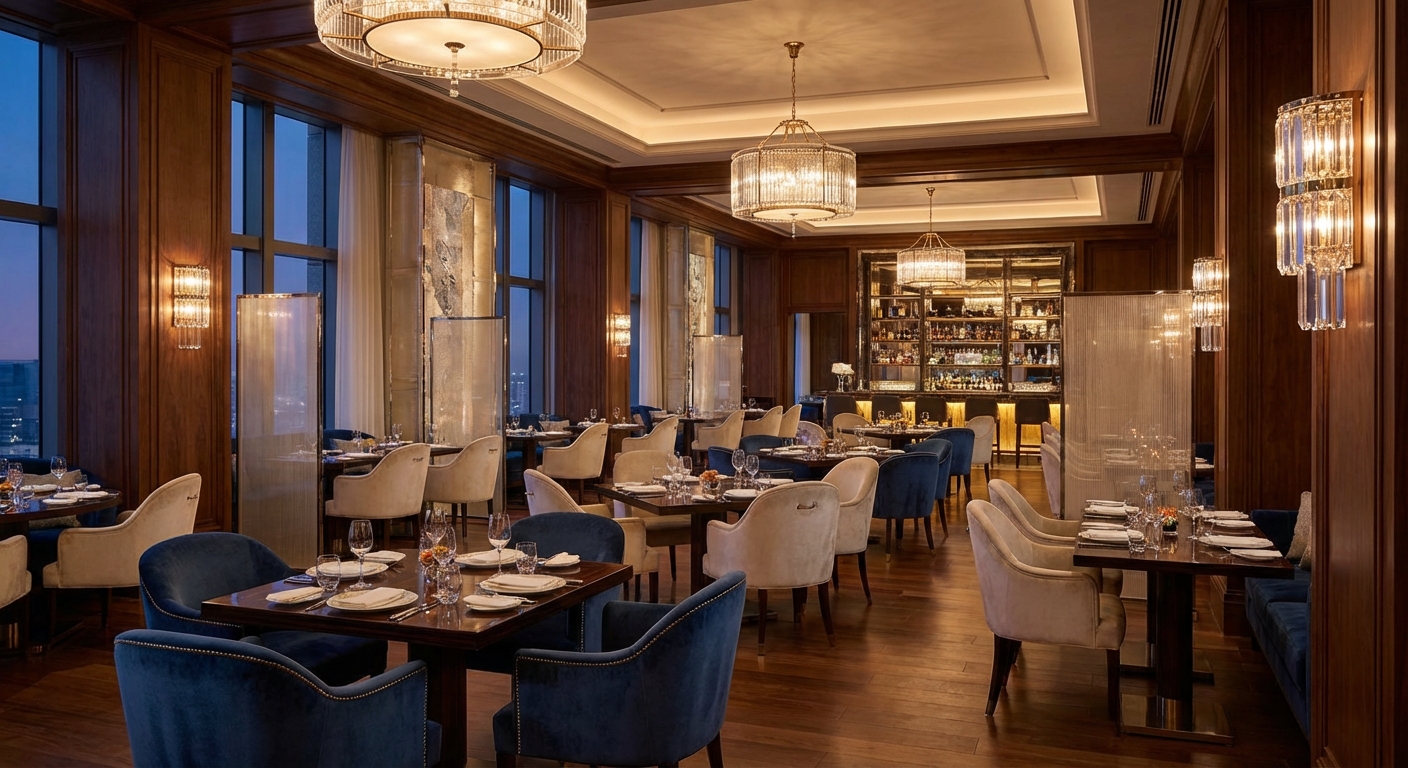
The single most important insight for commercial buyers: choose materials based on the intersection of optical performance requirements, operational environment, and procurement constraints—rather than on appearance alone. For guest-facing lighting in luxury public spaces, crystalline sparkle and refraction can justify longer lead times and higher procurement costs. For back-of-house areas, corridors, or where modularity and quick replacement are priorities, acrylic frequently delivers a stronger total-cost outcome.
Technical Detail: Material Properties and Performance
Acrylic (PMMA)
- Optical clarity: High initial transparency (up to ~92% transmittance). Good for diffusers and faceted designs that require even wash of light.
- Weight and handling: Lightweight, significantly lighter than glass—simplifies installation and reduces suspension system requirements.
- Fabrication: Readily thermoformed, CNC routed, laser cut, glued. Well-suited for bespoke, rapidly iterated designs and prototypes.
- Durability: Good impact resistance compared to glass; more prone to surface scratches. Susceptible to UV-induced yellowing if not UV-stabilized.
- Thermal and fire considerations: Lower softening temperature than glass—requires careful LED heat-management design. Flame retardant grades are available; verify local codes for public spaces.
- Sustainability: Recyclable in some streams but often downcycled; off-gassing and VOCs depend on manufacturing.
Crystal (Glass variants: K9, lead-free crystal, branded crystal)
- Optical clarity and refraction: Superior brilliance and prismatic refraction—preferred where sparkle and high luxury perception are desired.
- Weight and structural load: Heavier—requires stronger suspension systems and mechanical fixing details.
- Fabrication: Cutting, polishing, and faceting are labor- and time-intensive. Custom shapes may require long lead times and higher minimum order quantities (MOQs).
- Durability: Scratch-resistant, excellent ageing stability, non-yellowing.
- Thermal and fire considerations: Excellent thermal stability; does not soften under LED operating temperatures.
- Sustainability: Glass is more readily recyclable but high-quality crystal may require special handling.
“The right transparent material is chosen when design intent, mechanical constraints, and lifecycle costs are considered together—not when any single attribute dominates the decision.”
Cost vs Perceived Value: Making Budget-Based Decisions
- Economy/Value Tier: Acrylic is the default choice for projects prioritizing speed and budget. It enables complex shapes and integrated diffusers at lower unit cost and faster fabrication.
- Mid Tier: High-grade acrylic with UV stabilization, precision polishing, and CNC finishing can approach the aesthetic of glass for moderate budgets.
- Premium/Luxury Tier: Crystal is the material of choice for signature pieces in lobbies, ballrooms, and suites where the luminance, sparkle, and perceived luxury create measurable brand value.
Cost drivers to include in your budget model:
- Material unit cost (per m2 or per kg)
- Fabrication complexity (CNC time, hand-polishing for crystal)
- Lead time and expedited fees
- Transportation and insurance (fragile crystal requires special packing)
- On-site installation complexity and structural reinforcement
- Long-term maintenance (cleaning, scratch repair, replacement frequency)
Quantify these with a simple total-cost-of-ownership model: initial procurement + installation + maintenance + replacement risk over expected life (5–15 years typical for hospitality).
Lead Time & Logistics: What Architects Must Plan For
- Acrylic: Typical lead times are measured in days to a few weeks depending on complexity. Rapid prototyping and design changes are feasible during design development.
- Crystal: Lead times often extend to several weeks or months for custom facets and cutting—factor in MOQs and scheduling with specialty vendors. Seasonal demand can further extend delivery windows.
- Logistics: Crystal requires rigid packaging, vibration control, and higher insurance coverage. For large international projects, consider customs clearance for high-value crystal and coordinate transit times into the project schedule.
- Contingency: Specify long-lead items early in tender documents and require vendor confirmation of delivery windows and production slots.
Certification, Compliance & Safety
Commercial lighting components must comply with luminaire standards and building safety codes. Requests for documentation should be standardized in RFPs.
Key certificates and tests to request:
- CE marking and EN 60598 compliance for luminaires sold in the EU.
- UL/CSA certification for fixtures sold in North America (UL 1598/8750 if integrating LEDs).
- Material-specific: REACH and RoHS declarations for chemical compliance.
- Fire and smoke: Fire classification or flame spread testing for plastics in public areas (e.g., EN 13501 or NFPA references as applicable). Acrylic used in public spaces should be tested for flame spread and toxicity of combustion products.
- Photometric and electrical: LM-79/LM-80 reports for LED modules, and IES files for lighting design validation.
- Mechanical: IK impact ratings and wind/sway tolerance for suspended installations.
- ASTM or ISO tests for optical transmittance and scratch resistance when specifying performance thresholds.
Specify in procurement documents that vendors must provide these certificates with initial samples and at handover. Where codes require, insist on third-party testing rather than vendor self-declaration.
Design Integration: LED Compatibility and Thermal Management
- Thermal issues: Acrylic softens at elevated temperatures; ensure LED heatsink design directs heat away from the diffuser. Use thermal isolators and specify maximum surface temperatures in product requirements.
- Optical coupling: Crystal elements can create hotspots if paired with high-output LEDs. Use diffusers or engineered optics to control glare and mixed lighting effects.
- Maintenance access: Design fixtures for easy disassembly—replaceable acrylic panels are quicker and cheaper to service than fixed crystal assemblies.
- Controls integration: For dynamic color or tunable white solutions, ensure materials do not introduce color shifts under different correlated color temperatures (CCTs).
Specification Checklist for Architects and Hotel Designers
- Project zone and risk profile: public lobby vs guest corridor vs back-of-house.
- Visual goal: diffuse glow vs prismatic sparkle.
- Structural constraints: maximum suspended weight and anchor types.
- Thermal constraints: maximum component surface temperature and proximity to LEDs.
- Fire and smoke requirements: required classifications and acceptable materials.
- Maintenance plan: cleaning methods, surface hardness (scratch resistance), expected replacement intervals.
- Documentation required: CE/UL, LM-79/LM-80, RoHS/REACH, third-party optical test reports, material flame tests.
- Lead time and MOQ expectations: set clear delivery windows and penalty clauses for critical path items.
- Sample and mock-up policy: require full-scale mock-ups or sample panels before production sign-off.
Procurement Best Practices
- Insist on full-size samples rather than only swatches, and test samples under installed lighting conditions.
- Lock in design frozen dates to avoid late changes that incur retooling fees—use change orders to control scope creep.
- Partner with trusted suppliers who offer warranty, post-install support, and clear return/repair policies.
- For luxury projects, budget for an on-site installer familiar with heavy glass/crystal handling to avoid damage and delays.
Conclusion
Choosing between acrylic and crystal is a strategic decision that affects visual outcome, safety compliance, procurement timelines, and total cost of ownership. For rapid delivery and flexible design at lower cost, high-grade acrylic is often the practical choice. For signature installations where light performance and brand perception are paramount, crystal remains unmatched despite higher costs and longer lead times. Specify performance requirements, request third-party certifications, and build lead-time buffers into schedules to reduce risk.
For project-specific guidance, mock-up coordination, and specification support tailored to hotel and commercial environments, contact the Artilumen team. We provide material comparisons, photometric simulations, and procurement recommendations to help you meet design intent while controlling schedule and budget.